
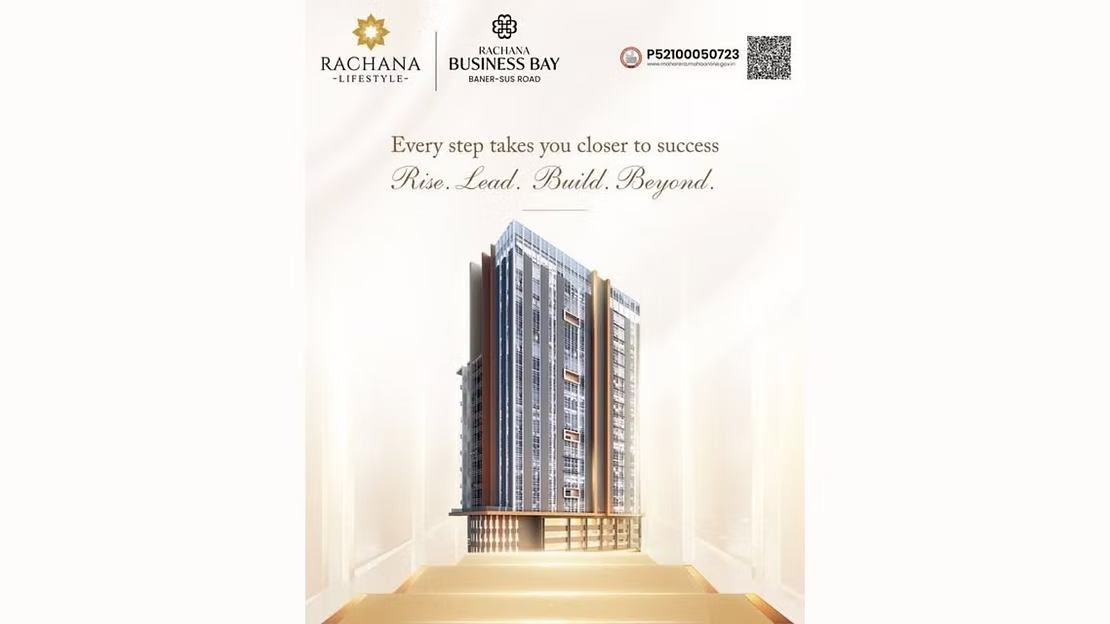
Pune’s commercial real estate has been through a quiet but significant shift over the last few years. The old model — sign a long lease, fit out the space yourself, hope your headcount forecast was right — doesn’t hold up the way it used to. Businesses grow unevenly, teams shrink and expand, and the cost of being locked into the wrong space for five years is real. What the market has responded with, particularly in the western corridors, is a generation of office buildings that are actually designed around how businesses operate rather than how much floor area a developer wants to move.
For tech startups specifically, this matters. A twelve-person engineering team and a sixty-person product company have very different space requirements. The interesting thing happening on Baner–Sus Road right now is that the better commercial projects in the area are handling both without asking either to compromise — and that’s where flexible commercial spaces for tech startups have started pulling serious attention from founders who used to default to co-working as their only option.
What “Flexible” Actually Means for a Tech Business
Flexibility in commercial real estate gets used loosely. Developers apply it to everything from short lease terms to modular furniture. What it actually means for a tech startup looking to own or lease space is more specific.
It means carpet area options that don’t force you into a unit designed for a team twice your size. It means a building where the infrastructure — power, lifts, connectivity provisions — can support a data-heavy operation without expensive retrofits. It means not paying for a reception area and a boardroom you’ll use twice a year when what you actually need is more workstations.
The 797 to 1,145 sq. ft. carpet area range available on Baner–Sus Road addresses this directly. A lean founding team fits comfortably in the smaller end. A scaled team with dedicated functions works in the larger configurations. The unit size doesn’t dictate the business size.
Why the Baner–Sus Road Address Makes Operational Sense
Location for a tech business isn’t just about prestige. It’s about the daily logistics for the people who work there and the clients who visit.
For a team that’s hiring, proximity to residential neighbourhoods, food options, and transit matters for retention more than most founders budget for when choosing their first office. Baner–Sus Road sits on a 100-feet wide DP road — that’s not a small operational detail when half your team is commuting by bike and the other half is driving in from Hinjawadi.
Baner’s Luxury Commercial Hub: What the Infrastructure Actually Delivers
A 23-storey commercial tower on a wide arterial road looks different from the ground than it does on a brochure. The infrastructure inside is where a building earns or loses its position as a genuine luxury commercial hub for businesses that have specific daily requirements.
Here’s what this particular building configuration offers and why each item is worth examining:
| Infrastructure Feature | What It Means in Practice |
| 4 high speed lifts | Reasonable wait times during peak hours in a tall tower — often overlooked until it’s daily friction |
| 3 levels of dedicated two-wheeler parking | Practical for a Baner address where most employees commute by bike |
| 2 levels of high-exposure showroom space | Retail footfall at ground level, which adds to the building’s overall tenant mix |
| DG backup for common areas | Operations don’t stop when grid power drops |
| Rooftop cafeteria | A functional breakout space that changes the rhythm of a working day |
| 2 staircases + firefighting system | Compliance and safety infrastructure that matters for enterprise clients visiting |
| Organic waste converter | Building-level sustainability that increasingly features in corporate ESG checklists |
| Exclusive entrance and exit | Controlled access that supports security requirements for tech tenants |
For a startup scaling into enterprise clients, a building that reads as a luxury commercial hub is part of what creates the right first impression. Clients notice the address, the lobby, and the lift before they notice the meeting room decor.
Flexible Commercial Spaces for Tech Startups: Ownership vs. Leasing
Most early-stage companies lease. Most founders who’ve been through one funding cycle wish they’d thought about ownership earlier. The maths on commercial property in a growing corridor is worth running before defaulting to a lease.
Three reasons ownership makes sense for a tech company at the scale-up stage:
- Fixed cost base — a mortgage payment doesn’t escalate with market rents, which in Baner have been moving upward with demand
- Asset on the balance sheet — for companies approaching Series A or beyond, owned commercial property is a tangible asset that investors and lenders read differently than a lease liability
- Control over the space — fit-outs, server room configurations, access systems — ownership removes the landlord approval layer for modifications that tech businesses frequently need
The 100% leasing assistance available on this project also matters for buyers who aren’t ready to occupy immediately — or who want to lease initially while their team grows into the space.
What Rachana Lifestyle Brings to This Address
Rachana Business Bay Baner is developed by Rachana Lifestyle, a Pune-based developer operating since 1988 with a portfolio across residential, commercial, and senior living. The RERA registration for this project is P52100050723 — verifiable on MahaRERA. Nearing possession.
A developer with that kind of local tenure in a single city has navigated enough market cycles to understand that a building’s reputation after possession matters as much as what it looks like before. For a tech startup choosing its first owned office, or a scale-up looking at a second location, that track record is worth factoring in alongside the floor plan.
Who This Actually Works For
Flexible commercial spaces for tech startups in Pune aren’t just for companies at seed stage trying to avoid co-working fees. The Baner–Sus Road corridor is now drawing
- Early-stage startups that want a credible owned address without committing to oversized space
- Scale-ups that need room for a growing team within a single building rather than splitting across two locations
- Tech service companies with enterprise clients who need a professional meeting environment
- Investors looking for commercial units in a corridor with strong leasing demand and nearing possession timelines
The unit range, the building infrastructure, the address, and the leasing support all point at the same thing: a building designed for businesses that are moving, not standing still.
Baner’s commercial market has been building toward this kind of supply for a while. The projects that get the configuration right — size, infrastructure, location, developer track record — tend not to stay available long once possession gets close.